


5 mistakes to avoid when choosing a duvet
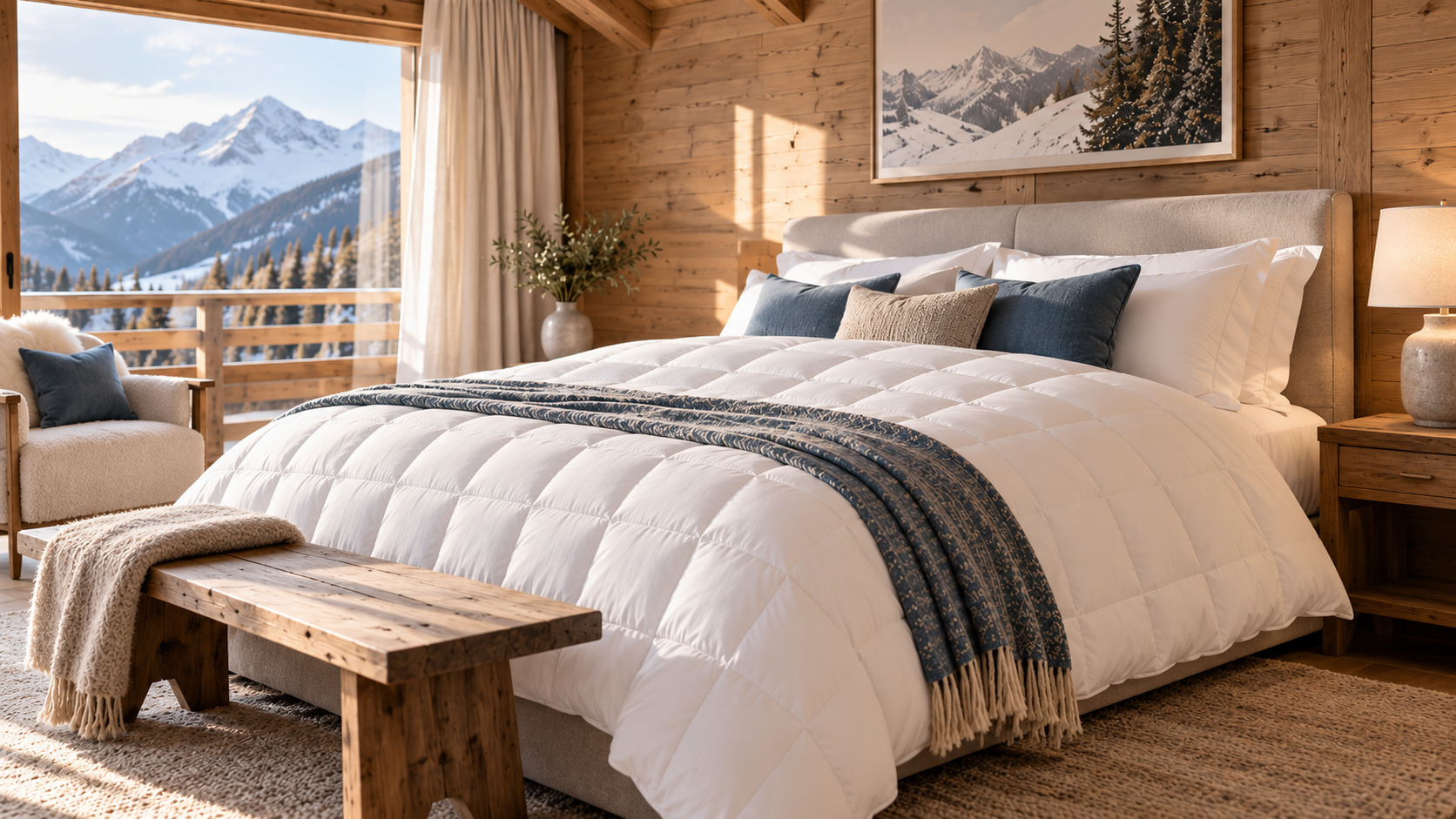
Choosing the right duvet may seem simple: you select the size, decide how warm it should be and choose your preferred filling. In reality, some apparently intuitive criteria can easily lead to choosing a duvet that is not well suited to your needs.
A duvet can be of excellent quality and still feel too warm, too heavy, too short or simply unsuitable for the person using it. There is therefore no single best duvet: the right one is the duvet that best suits the bedroom temperature, the bed and, above all, your sleeping habits.
In this DaunenStep guide, we look at the 5 most common mistakes when choosing a duvet, why they can affect sleeping comfort and which factors you should consider instead before buying.

1. Choosing the warmest duvet “just to be safe”
Why it is a mistake: a duvet that is too warm for the bedroom temperature and your personal sensitivity can be less comfortable than a model with a lower warmth level.
One of the most common mistakes is assuming that, especially in winter, it is always better to choose the warmest duvet available. In reality, a warmth level that exceeds your actual needs can make sleep less comfortable.
To choose correctly, you should consider not only the season but, above all, the actual temperature of your bedroom. Sleeping in a room kept at 20 °C is very different from sleeping in a bedroom that drops to 15 °C during the night.
Personal sensitivity also matters: someone who tends to feel cold may have very different needs from someone who tends to feel warm, even when they sleep in the same room.
| Warmth level | Indicative temperature | Ideal for |
|---|---|---|
| Mid Season | Above 22 °C | Mild rooms and transitional seasons |
| Classic Winter | 18–22 °C | Normally heated bedrooms |
| Cold Winter | 14–18 °C | Cooler bedrooms and people who tend to feel cold |
| Trio 4 Seasons | 14–25 °C | Anyone who wants to adapt their duvet to different seasons |
DaunenStep tip: before choosing the warmth level, monitor your bedroom temperature for a few nights. This is a more useful reference than simply distinguishing between an “autumn duvet” and a “winter duvet”.
2. Thinking that more grams automatically mean more warmth
Why it is a mistake: the weight of the filling alone does not determine how warm a duvet is. The quality and type of filling, fill power and construction of the product all contribute to thermal comfort.
When comparing two duvets, weight is one of the figures that tends to attract the most attention. It is therefore natural to assume that the duvet with more grams of filling must also be the warmer one.
In reality, weight and warmth level are not the same thing. A duvet’s ability to retain warmth depends on the amount of filling, but also on the type and quality of the material and on the construction of the duvet itself.
Why can a lightweight duvet still be very warm?
With natural down, fill power is particularly important. This value describes the ability of the down clusters to expand and create volume.
High-quality down can create a structure rich in air, providing effective insulation while maintaining a very light feel.
Thermal comfort therefore depends on several factors:
- Type of filling: down, feathers, synthetic fibres and natural fibres have different characteristics.
- Quality of the filling: different quality levels can exist even within the same type of material.
- Fill power: with natural down, it indicates the filling’s ability to develop volume.
- Amount of filling: it contributes to the warmth level but should not be considered in isolation.
- Duvet construction: this affects how the filling is distributed and how the duvet performs thermally.
Total weight and grams per square metre are not the same thing
It is also important not to compare the total weight of duvets with different dimensions directly. A double duvet will inevitably contain more filling than a single duvet simply because it covers a larger surface area.
To compare two products correctly, you should therefore consider the size, the type of filling and, where available, the amount of filling expressed in grams per square metre.
In short: if you want to understand how suitable a duvet is for your bedroom temperature, start with its warmth level. Weight is also useful for assessing the type of feel you prefer while sleeping.
To explore this topic in more detail, read the DaunenStep guide How to choose a duvet: the difference between weight and warmth level .
3. Relying only on the words “single”, “small double” or “double”

Why it is a mistake: labels such as “single” or “double” do not always correspond to one universal size. To choose correctly, you should compare the width and length of the duvet in centimetres.
Choosing the right size may also seem straightforward: if you have a double bed, you buy a double duvet. But general size labels are not always enough.
Width and length in centimetres provide a much more precise reference. Beds in the same category can have different dimensions, and the height of the person using the duvet can also affect the choice.
A tall person, for example, may prefer a longer duvet to ensure better coverage around the feet. Similarly, someone who moves a lot during sleep may appreciate a little extra length or width.
What to check before choosing the size
- the width and length of the mattress;
- the height of the person using the duvet;
- the amount of side coverage you prefer;
- how much you move during sleep;
- the size of the duvet cover you intend to use.
In the DaunenStep range, for example, 250×200 cm is the standard double size, while 250×220 cm provides an additional 20 centimetres in length.
DaunenStep tip: always check the width and length in centimetres before buying. These measurements are more reliable than simply relying on the labels “single” or “double”.
To explore the subject further, read the DaunenStep guide Duvets: a guide to sizes , with information for single, small double and double beds.
If you are looking directly for a duvet for two people, discover our DaunenStep double duvets.
4. Looking only at the filling material
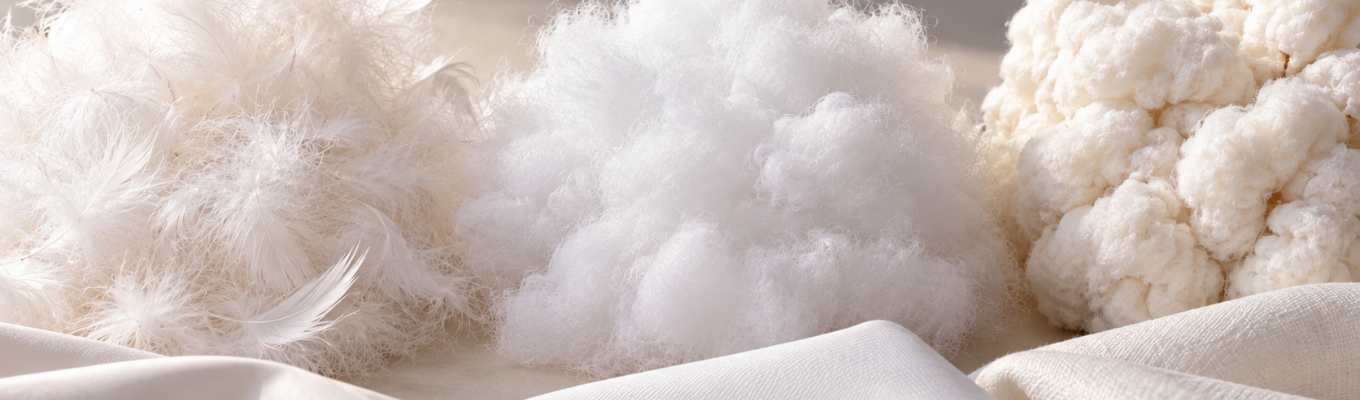
Why it is a mistake: knowing whether a duvet is filled with down, synthetic fibre or another natural fibre is not enough to assess its comfort and performance. Quality, composition, warmth level, construction and cover fabric should also be considered.
“Down or fibre?” is one of the first questions people ask when choosing a new duvet. The material is certainly important, but on its own it does not fully describe how the duvet will perform while you sleep.
Two duvets made with the same general type of filling can differ considerably in quality, lightness, volume, outer fabric, construction and warmth level.
With natural down, the percentage of down is not the only thing that matters
With a natural down duvet, it is useful to consider all of the technical characteristics rather than focusing only on the stated composition.
- Composition: percentage of down and feathers.
- Quality of the filling: this affects volume, lightness and the overall performance of the duvet.
- Fill power: this helps assess how effectively the down can expand.
- Warmth level: this helps identify the most suitable model for the bedroom temperature.
- Cover fabric: this contributes to the overall sensation of lightness and comfort.
- Construction: this helps distribute the filling correctly across the surface.
What if I prefer an alternative to down?
There are also many different options among fibre-filled duvets. Synthetic fibres can be particularly interesting for those looking for easy care and specific washing characteristics, while natural fibres such as cotton or wool offer different sensations and properties.
| If you are looking for... | Focus especially on... | Why |
|---|---|---|
| Lightness and volume | Down quality and fill power | High-quality filling can provide excellent volume with very little weight |
| Easy care | Fibre type and washing instructions | Some solutions are designed to be particularly practical to maintain |
| A natural alternative to down | Cotton or wool | They offer different characteristics and sensations compared with down |
| A specific level of warmth | Warmth level | The material alone does not indicate how suitable the duvet will be for your bedroom |
DaunenStep tip: do not stop at labels such as “100% down”, “fibre” or “cotton”. Consider composition, filling quality, warmth level, cover fabric and care requirements together.
5. Forgetting how you sleep
Why it is a mistake: two people sleeping in the same bedroom can have very different thermal needs. Personal sensitivity to heat and cold should therefore be part of the duvet selection process.
Even after considering temperature, size and filling, one essential factor remains: the person who will actually sleep under the duvet.
Two people can sleep in the same bedroom, in the same bed and at the same temperature, yet experience comfort in completely different ways.
Before buying, it can therefore be useful to ask yourself a few simple questions.
- Do you generally feel warm or cold during the night?
- Do you prefer a very lightweight cover or do you like to feel a little more weight over your body?
- Do you move around a lot while sleeping?
- Do you sleep alone or with a partner?
- Do you and your partner have the same sensitivity to heat and cold?
- Does your bedroom temperature change significantly between summer, transitional seasons and winter?
What if one partner feels warm and the other feels cold?
This is a very common situation. The ideal duvet for someone who tends to feel cold may be excessively warm for a partner with different thermal needs.
Trying to find a single compromise is not always the most comfortable solution. In some cases, using two single duvets with different warmth levels allows each person to choose the cover that best suits them.
What if the temperature changes considerably during the year?
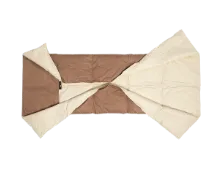
For those who want to use the same system across different seasons, a Trio 4 Seasons duvet offers greater flexibility: the different elements can be used separately or combined depending on the temperature.
In short: the right duvet does not depend only on the bed or the season. It should also suit your personal thermal sensitivity, sleeping habits and the sensation you prefer during the night.
Quick choice
How do you choose the right duvet?
| First ask yourself... | Check... | Why |
|---|---|---|
| What temperature is my bedroom? | Warmth level | Helps avoid a duvet that is too warm or too light |
| Do I tend to feel cold or warm? | Personal sensitivity | People sleeping in the same room can have different needs |
| What are the actual dimensions of my bed? | Width and length in centimetres | Helps avoid a duvet that is too short or provides insufficient coverage |
| Do I want to feel cocooned or do I prefer maximum lightness? | Type and quality of filling | This affects how the duvet feels on the body |
| Do my needs change throughout the year? | Seasonality and modularity | A Trio 4 Seasons solution may be useful |
Buying guide
Frequently asked questions: how to avoid choosing the wrong duvet
What is the most common mistake when choosing a duvet?
One of the most common mistakes is choosing mainly according to the season or weight without considering the actual bedroom temperature and your personal sensitivity. Warmth level should be one of the first parameters you assess.
How can I tell if a duvet is too warm for me?
If you often feel the need to uncover yourself during the night, experience excessive heat or sleep in a well-heated bedroom with a duvet designed for much colder temperatures, the warmth level may be higher than you need.
Is it better to choose a warmer duvet just to be safe?
Not necessarily. An excessively warm duvet may be less comfortable. It is better to choose the warmth level according to the bedroom temperature and then adjust the choice based on your personal sensitivity to heat and cold.
How can I tell if my duvet is the wrong size?
If you uncover yourself easily during sleep, the side coverage is insufficient or the duvet does not comfortably reach your feet, it may be useful to check its width and length. Measurements in centimetres are more reliable than labels such as “single” or “double”.
What can couples do if one person feels warm and the other feels cold?
When thermal needs are very different, one double duvet can become an unsatisfactory compromise. One solution is to use two single duvets with different warmth levels, allowing each person to choose the cover that best suits them.
How should I compare two different duvets correctly?
Do not compare only the total weight. Check that the duvets have comparable dimensions and consider warmth level, type and quality of filling, fill power for down, construction and cover fabric together.
DaunenStep duvets
DaunenStep offers different types of duvet designed for different bedroom temperatures, personal preferences and sleeping habits, with solutions in down, synthetic fibre and natural fibre.
- For those looking for lightness and natural comfort: our down duvets are available in different compositions, qualities and warmth levels.
- For those looking for an alternative to down: the range includes synthetic and natural fibre solutions with different characteristics.
- For those who want greater flexibility throughout the year: Trio 4 Seasons duvets allow you to adjust the warmth level according to the season.
- For those looking for a specific size: different sizes are available for single, small double and double beds, including longer versions.
Discover all DaunenStep duvets and compare warmth levels, sizes and fillings to find the solution that best suits the way you sleep.
Conclusion: choosing the right duvet means avoiding reliance on a single parameter. The heaviest model is not necessarily the warmest, the warmest duvet is not always the most comfortable and the label “double” alone is not enough to identify the correct size.
Bedroom temperature, personal thermal sensitivity, warmth level, bed dimensions, filling quality and sleeping habits should all be considered together. It is this combination that turns a good duvet into the right duvet for the person using it.
Related products